FX Impact on Market Cap: How Investors Measure a 10–20% Hit
By MarketCapLens · Published · 6 min read
FX moves change a firm’s market cap through three channels: accounting translation of foreign earnings, real cash-flow sensitivity, and revaluation of foreign-currency debt. IMF firm-level research finds these channels can suppress returns and valuation by 10–20% in extreme policy shocks. Below, we define each channel, show how to measure exposure, and walk through a valuation adjustment.
TL;DR:
- Translation adjustments usually affect accumulated other comprehensive income rather than cash, except in highly inflationary subsidiaries, where they flow through operating results.
- A 10% home currency depreciation can raise leverage at firms with foreign currency debt, while appreciation increases their borrowing capacity.
- Real depreciation can lift profits, investment, and market capitalization for financially constrained, labor intensive firms, while dollar debt and limited foreign revenue increase downside exposure.
- Use filings to map foreign revenue, debt, and hedge maturities, then model scenarios as ranges because filings lag and hedge books can be complex.
MarketcaplensTrack Market Cap Through FX MovesMarketCapLens brings together share prices, historic data, and sector breakdowns to help you examine market trends alongside currency-driven valuation shifts.Explore market cap data
Table of Contents
- What are translation, transaction, and financing exposure?
- How do FX shocks feed into valuations?
- What does the evidence say about the size of the effect?
- How do you measure a firm’s FX exposure?
- How do you turn exposure into an adjusted valuation?
- Which research should investors weight most heavily?
- Why we check currency moves before trusting a market-cap swing
- Where can you start tracking FX-driven market-cap changes?
- FAQ
- Sources
What are translation, transaction, and financing exposure?
Investors often blur three different risks. Separating them keeps accounting noise from being mistaken for lost value.
- Translation exposure: foreign subsidiaries’ results are remeasured into the reporting currency, and the differences flow into accumulated other comprehensive income (AOCI) rather than cash. Filings show this in translation adjustment notes.
- Transaction exposure: currency swings change the price of revenues and costs, so margins and real cash flows move. Practitioners treat this as economic exposure, distinct from the non-cash accounting kind.
- Financing exposure: debt in a dominant currency such as the dollar grows in local-currency terms when the home currency falls, which hits the balance sheet directly.
Accounting treatment follows ASC Topic 830. Subsidiaries in highly inflationary economies are an exception: translation adjustments run through operating results instead of AOCI, which creates earnings volatility.
How do FX shocks feed into valuations?
Each channel reaches the share price differently, and they often arrive together.
- Accounting translation: cumulative translation adjustments change book equity, but cash flows may stay untouched, so the market often looks through them.
- Transaction channel: a weaker home currency can lift competitiveness for exporters, while a stronger one squeezes margins. Local-currency pricing decides who captures the change.
- Debt revaluation: when the home currency depreciates, dollar liabilities swell, which can force deleveraging and asset sales even at profitable firms. IMF Global Financial Stability Report material describes how this follows currency stress.
- Market-wide channels: tighter dollar liquidity raises hedging costs and widens the cross-currency basis, acting like a tax on global equity valuations.
Pro Tip: When a stock drops on a currency shock, check first whether the hit is in AOCI (accounting) or in guidance for margins and debt service (real value).
Hedging quality varies a lot, and the earnings quality checks on this partner blog help you tell operational currency effects from accounting-driven ones.
What does the evidence say about the size of the effect?
The research agrees on direction more than on a single number. Depreciations tend to hurt more than appreciations help, especially for firms with foreign-currency debt.
A 10% depreciation can produce economically large changes in leverage for firms with FX debt, according to IMF firm-level evidence, while appreciations raise their borrowing capacity. The asymmetry matters: downside scenarios deserve more weight in your sizing.
Winners and losers depend on the business. Cross-country IMF evidence finds real depreciations boost profits, investment, and market capitalization for financially constrained, labor-intensive firms. Firms with large dollar borrowings and little foreign revenue sit on the other side.
Hedging context matters too. The BIS reports average daily FX turnover of about $9.6 trillion in April 2025, driven by spot, forwards, swaps, and options. That depth makes hedging possible, though funding strains can widen spreads and weaken hedges in stress.
How do you measure a firm’s FX exposure?
Start with filings. The 10-K, the MD&A currency discussion, and the notes on translation adjustments hold most of what you need.
| Metric | Where to find it | What it tells you |
|---|---|---|
| Share of revenue in foreign currencies | Segment and geographic notes | Translation and transaction sensitivity |
| Share of debt in foreign currencies | Debt footnote | Balance-sheet revaluation risk |
| Net foreign assets and liabilities | Balance sheet notes | Size of remeasurement |
| AOCI translation adjustment | Equity statement | Accumulated accounting effect |
| Hedge notional and maturities | Derivatives note | Protection and its expiry |
A simple sensitivity test:
- Pull foreign revenue share, foreign costs, and foreign-currency debt from the latest filing.
- Pick a hypothetical move, say 10% depreciation of the home currency.
- Estimate the change in operating income from revenue and cost exposure, net of hedges.
- Add the change in debt service and net debt from foreign-currency borrowings.
- Compare the combined effect against equity value.
Filings lag, and hedge books can be complex, so treat the result as a range, not a point estimate.
How do you turn exposure into an adjusted valuation?
Work through this sequence for a pro forma or DCF adjustment.
- Quantify exposures and hedges: revenue, costs, debt, and derivative positions by currency.
- Define scenarios: test moves in each direction, then rerun the income statement and balance sheet.
- Adjust cash flows or discount rate: reflect higher hedging costs and risk premia, then recompute equity value. Our DCF calculator handles the recomputation.
- Convert to market cap: compare the adjusted equity value with the current figure and express the gap as a percentage change.
Add debt revaluation separately.
Pro Tip: Derivatives can mute reported earnings swings, but they do not necessarily undo a competitor’s cost advantage from a cheaper currency.
Which research should investors weight most heavily?
Weight primary evidence over commentary. IMF work on dominant currency financing traces how revaluation of dollar debt moves real outcomes, and its October 2025 stability chapter explains how dealer concentration and basis moves amplify shocks. The BIS Triennial Survey frames hedging liquidity. Event studies on trade-policy shocks show trade-exposure and uncertainty channels jointly accounted for about 20% of the initial stock-price decline among tradable firms in one episode.
Why we check currency moves before trusting a market-cap swing
Our view: a sudden market-cap drop that coincides with a currency shock deserves a second look before anyone calls it a fundamentals problem. We make three checks routine. We watch for market-cap moves that line up with currency moves, we read AOCI and foreign-currency debt share in each filing, and we run a quick sensitivity pass against live market-cap and price history. Numbers alone mislead, so we pair the adjustment with the business model: who sets prices, in which currency, and who borrows in dollars.
— MarketCapLens
Where can you start tracking FX-driven market-cap changes?
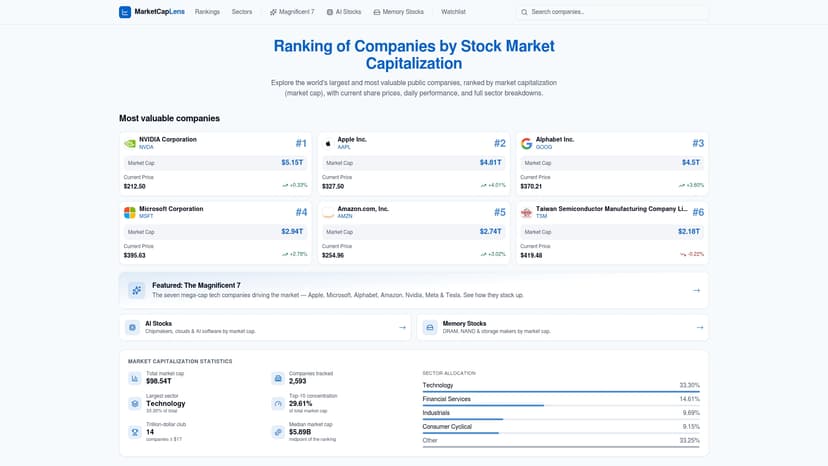
We built tools for exactly these checks. Market Cap Rankings lets you compare peers live after a currency move, our Market Cap Calculator helps calculate market capitalization, and each company page shows historical market-cap moves. Open the rankings, pick two exposed names, and run your first scenario today.
This article is general information, not a substitute for advice from a qualified financial advisor. Consult a qualified financial professional about your own circumstances before acting on anything here.
FAQ
What is FX impact in trading?
FX impact is the change in a trade’s or company’s value caused by currency movements. For a company, it shows up in translated earnings, cash flows, and the value of foreign-currency debt, which can move the share price.
How big is the FX market?
Very large. The BIS Triennial Survey reports average daily turnover of about $9.6 trillion in April 2025. Spot, forwards, swaps, and options all contribute, which supports hedging liquidity for companies.
Do FX moves always hurt market cap when a currency falls?
No. Depreciation can help labor-intensive exporters, as IMF cross-country evidence suggests, but it tends to hurt firms carrying foreign-currency debt. Your result depends on revenue mix, debt currency, and hedges.
Is a $2 billion market cap good?
It depends on the sector and your goals. A $2 billion market cap sits in the smaller range, so FX exposure can matter more when revenue or debt is concentrated in one foreign currency.
Sources
Recommended
For informational purposes only and is not investment advice. Do not rely on the facts, figures, ticker symbols, or other statements in this article — they may be incomplete, outdated, or incorrect, and we are not responsible for errors. See our disclaimer.